THE CALLER
Taught, then called
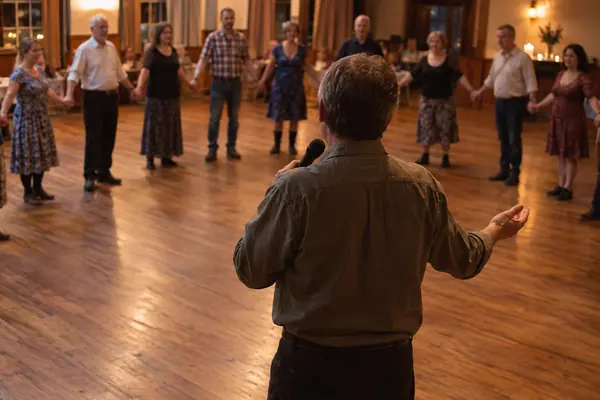
The English Folk Dance and Song Society says there is always a caller, who first teaches the moves and then calls the figures throughout the dance.
Your first dance dancingway
1651the first book of country dances
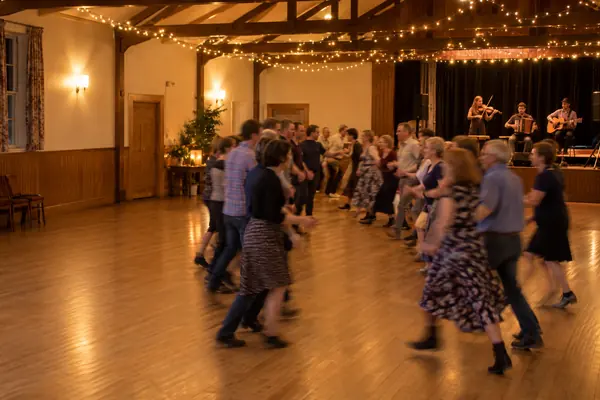
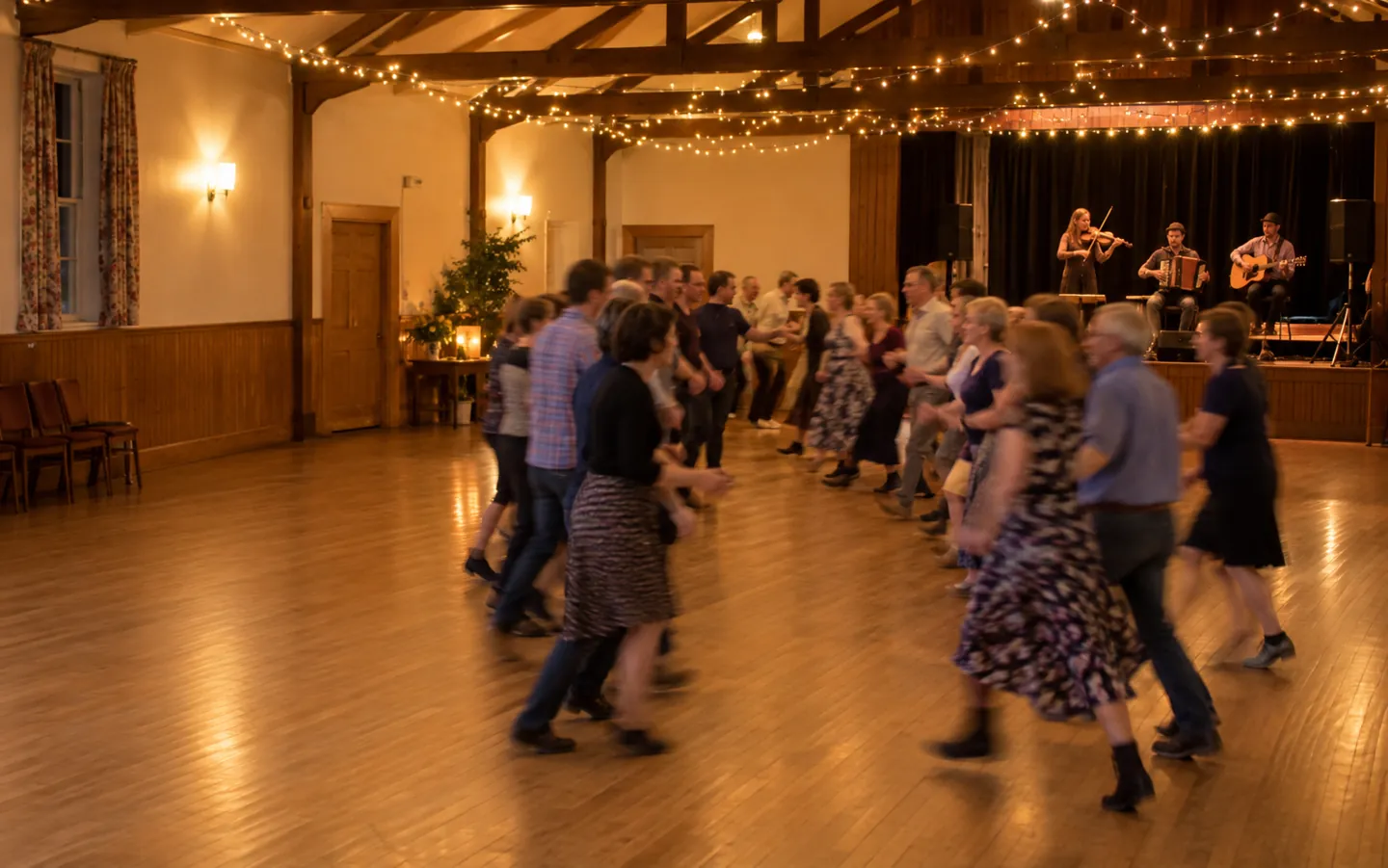
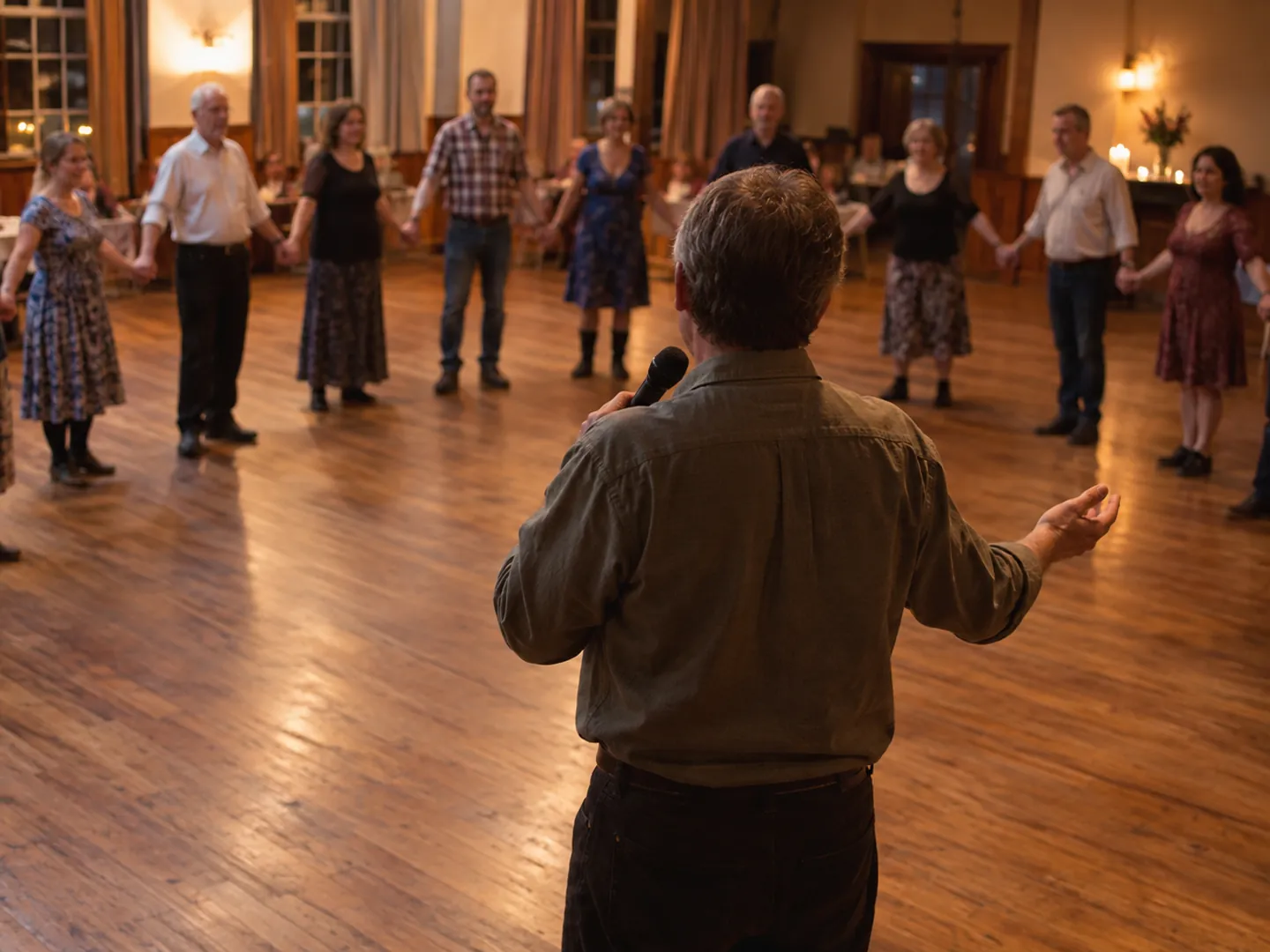
At a ceilidh or barn dance, a caller teaches each dance first and then calls the moves as the band plays. It is group dancing, most often with a partner and one or more other couples.
Updated
THE SHORT ANSWER
Called dances are built to welcome
people who have never done them before.
THE CALLER
The English Folk Dance and Song Society says there is always a caller, who first teaches the moves and then calls the figures throughout the dance.
Your first danceTHE NAMES
The words overlap. EFDSS says the occasion usually decides the name: a school may hold a barn dance, a festival a ceilidh.
Read the posterTHE HISTORY
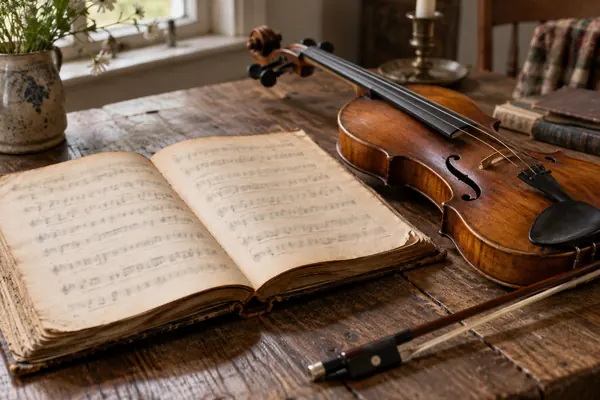
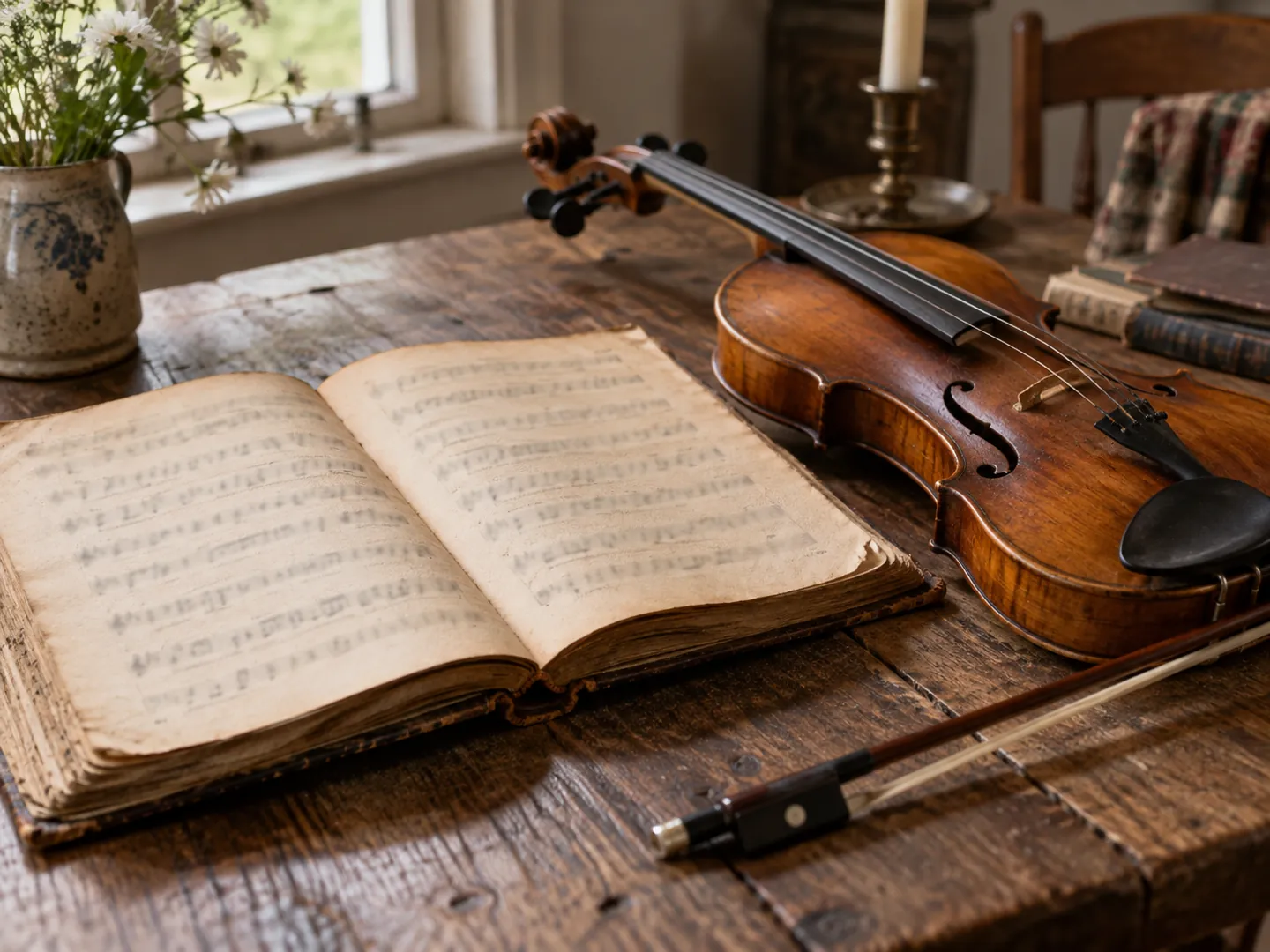
John Playford's The English Dancing Master printed the figures and tunes of 105 country dances, the first collection of its kind.
See the numbersA QUICK POSTER CHECK
Pick the word on the poster to see what EFDSS says to expect. The bar shows how formal or intricate the dancing tends to be.
Based on the English Folk Dance and Song Society's Beginners' Guide to English Folk Dance. Events vary, so check with the organiser.
TWO NUMBERS WORTH KNOWING
One figure from the first edition,
one from the whole series.
105
Country dances in The English Dancing Master
Playford's first edition held the figures and tunes for 105 English country dances, according to the Country Dance and Song Society's compendium. A second edition the next year added nine more.
1651 · FIRST EDITION
1,053
Unique dances across the series
Eighteen editions of the first volume, plus a second and third volume, eventually held 1,053 unique dances and their music.
1651–1728 · ALL EDITIONS
Oxford's TORCH programme notes that Playford almost certainly did not write the melodies or dances himself; some tunes were already very old.
FOUR THINGS TO KNOW
Social dances are designed so that a room of beginners can join in. EFDSS says they can be very accessible to new dancers.
The caller teaches the moves and figures before the music starts, then keeps calling them as you dance.
Dances are in circles, squares or longways sets, which are a column of pairs, usually with other couples.
Figures have names such as dip and dive, promenade and basket. A dance is a sequence of them.
Steps include the skip, slip step, hop step, rant and polka. The caller teaches the moves before each dance begins.
WHERE THE DANCES CAME FROM
EFDSS says the older dances come from collections of English country dances from the 17th to the 19th century. Cecil Sharp revived and popularised them in the early 20th century.
The tradition has never stopped moving. New dances are constantly being devised, Cornish social dancing is having a revival, and Oxford's TORCH notes Playford's tunes reach millions through films and series such as Pride and Prejudice, Poldark and Bridgerton.
Questions
Often very little. EFDSS says the terms are interchangeable and the nature of the occasion tends to decide whether it is called a ceilidh, a country dance or a barn dance.
No. At a called dance there is always a caller who first teaches the moves and figures, then calls them throughout the dance.
EFDSS describes English social dancing as dancing in groups, most often with a partner and one or more other couples, in circles, squares or longways sets.
A London publisher whose The English Dancing Master of 1651 was the first published collection of English country dances and tunes. The series ran to 18 editions over about 80 years.
A form that developed in the USA from British roots. EFDSS describes it as up-tempo, fast-moving and intricate, and says it is popularly danced in Britain today.
ABOUT THIS NAME
dancingway.com is part of the DoodleSale portfolio. It isn't in an auction right now, but you can ask about leasing it.